There are two ways to incorporate yeast into dough:
1: Dry Blend Method: Yeast can be blended directly with dry ingredients
2: Rehydration Method: Yeast can be dissolved in liquids before mixing with the dry ingredients.
Don’t stress over liquid temperatures! If the liquid is comfortably warm for you to touch, you will not kill the yeast. Yeast begins producing CO2 as soon as it is activated and continues until the dough is baked in the oven. When the dough reaches 140˚F in the first few minutes of baking, yeast activity ceases
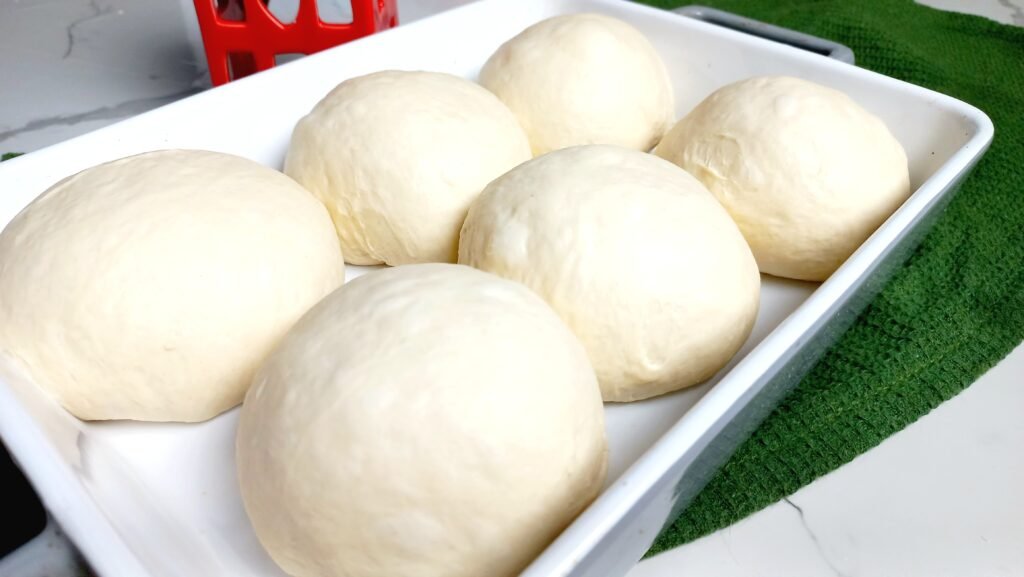
Homemade Pizza dough
What is yeast?
Yeast are living organisms, just like us. They’re used in baking recipes to create flavors and texture. The most common strain is called Saccharomyces cerevisiae, and this baker’s yeast can vary slightly by brand and product. Nowadays, yeast technologies offer a handful of convenient dried options that are used to develop baked goods faster.
How does yeast work in bread?
Yeast love carbohydrates like sugar and starches, and there’s an abundance of this in dough. Two things are happening during the fermentation process when you leave the dough alone to let it rise.
The yeast organisms eat the sugar and starches, producing carbon dioxide and alcohol. The gluten formation in the flour traps the bubbles, which add lift and texture to the bread. Without yeast, loaves and rolls would be hard and dense.
The importance of temperature
If you learn just one thing, let it be this: hot water kills yeast! Remember, yeast are alive, but if exposed to temperatures at 138ºF (59ºC) and above, they will die. If this happens, they will no longer ferment.
There are different ranges of liquid temperatures to use when adding to the dough, so make sure to check the manufacturer’s guidelines. Yeast is the most active in fermentation between 75 to 95ºF (24 to 35ºC).
Compressed fresh yeast (fresh cake yeast)

This perishable fresh yeast is sold as solid cubes or blocks in the refrigerator section of some specialty markets. It combines living cells, starch, and about 70% moisture. No proofing is required, just crumble and add it to the dry ingredients or soften it in warm water before using. You must store it in the refrigerator and use it within a few weeks.
| Compressed Fresh Yeast | |
| Use Liquid Temperature Of | 95 to 100ºF (35 to 38ºC) |
| 1st Fermentation (after kneading) | 1 to 1 ½ hour+ |
| 2nd Fermentation (after shaping) | About 1 hour |
| Good For | Lean, rich, or sweetened doughs. Longer duration, slow-rising time bread like no-knead or artisan loaves. Recipes that require sponges. |
Active dry yeast

Shelf-stable dried and dormant yeast granules are typically sold in 2 teaspoon-sized (¼ ounce) packets or jars that can last for 1 to 2 years. The high-temperature drying process reduces the number of living cells on the exteriors. The yeast must be proofed in warm water with sugar to remove the nonliving cells and activate the living ones.
Good for making white bread, whole wheat bread, naan bread, and focaccia.
| Active Dry Yeast | |
| Use Liquid Temperatures Of | 100 to 110ºF (38 to 43ºC) |
| 1st Fermentation (after kneading) | 1 to 2 hours+ |
| 2nd Fermentation (after shaping) | 30 minutes to 2 hours |
| Good For | Lean, rich, or sweetened doughs. No-knead bread, pizza, sandwich bread, bagels, rolls, laminated doughs, sweetbreads, overnight doughs, and artisan bread. |
Wake them up!
Some recipes call for a quick test to “prove” its viability, a gentle nudge to get the organisms to work. It’s most often used for active dry yeast. This usually involves mixing ¼ cup of warm water, about 100 to 110ºF (38 to 43ºC), with the yeast and a small amount of sugar (usually 1 teaspoon).
After about 5 to 10 minutes, you should see bubbles form in the bowl. This means the yeast is alive and okay to use.
Whether using your hands or a stand mixer, gentle and rhythmic motions help to stretch the dough. A dough hook is a recommended mixer attachment for longer kneading times.
Do a test for proper kneading
The dough can get over-kneaded, becoming too tough to stretch with your fingers, and will not rise. It should be smooth, elastic, and have small visible bubbles beneath the surface. To check, pinch off a small piece and stretch it. This gluten window should not tear easily and be translucent in appearance.
How does no-knead bread work?
No-knead bread recipes work because the dough sits for at least 6 hours to overnight on the counter. During this time, the carbon dioxide bubbles formed during fermentation moves the dough particles around. This tiny kneading action, over several hours, effectively develops gluten to give a wonderful structure and crust.
Best conditions for fermenting the dough
Yeast begins fermenting between 60 to 70ºF (16 to 21ºC), perfect for extended countertop rises. Baguettes, no-knead doughs, and artisan loaves benefit from longer gentle fermentation for more flavor development.
A range of 75 to 95ºF (24 to 35ºC) is the best temperature for the activity to accelerate the process without killing the yeast or over-producing gas. I find that using a homemade oven-proofing box creates the ideal warm, humid conditions. It also reduces the rise time to about an hour or less per fermentation step.
How Is Yeast Used in Baking?
When combined with liquid and sugar, yeast makes dough rise. Yeast, while also providing flavor, creates carbon dioxide in the dough. This stretches and expands it. Yeast thrives in warm temperatures, which is why warm liquid is usually used to make yeasted bread dough. However, hot liquid can kill the yeast—around 135°F (57°C) or higher. A good rule of thumb: if it’s too hot to touch, it’s too hot for the yeast.
Yeast is also effective in cooler temperatures, but it requires more time to expand the dough. In some cases, a slower rise time is preferred because more flavor is produced in the process. In some of my bread recipes, we use cooler liquid and a long rise time, and may even require the dough to rest in the refrigerator, to purposely slow the yeast’s activity and develop the flavor and texture.